The Moment an Auditor Finds an Expired Certificate
Let's be specific. The auditor doesn't just glance at your calibration records. They pick an instrument off the production floor, read its ID number, and then ask to see the corresponding certificate. If the calibration date plus the interval puts the next-due date in the past, you have an expired certificate.
This isn't a hypothetical. According to ISO 9001 registrar data, expired calibration certificates are among the top three findings in manufacturing surveillance audits. It happens because calibration management systems are often spreadsheet-based, and spreadsheets don't send reminders.
What the Auditor Does Next
The auditor's response depends on several factors: whether it's a surveillance or recertification audit, how many instruments are affected, and whether the expired instrument was used on product during the lapsed period.
Single instrument, recently expired (days)
Minor nonconformanceThe auditor writes a minor NC. You'll need to provide a corrective action plan within 30 days showing how you'll recalibrate the instrument and prevent recurrence.
Multiple instruments expired
Major nonconformanceThis signals a systemic failure in your calibration management system. The auditor escalates to a major NC, which may require a follow-up audit visit to close out.
Expired instrument used on shipped product
Major NC + product containmentIf the expired instrument was used to verify product that was shipped to customers, you now have a potential product quality issue. This triggers containment, customer notification assessment, and often a dedicated corrective action team.
No evidence of calibration management system
Audit suspension riskIf the auditor determines there is no functioning system to manage calibration schedules, the audit can be suspended. This is rare but devastating — your certification is at risk.
The 4-Step Recovery Protocol
If the auditor finds an expired certificate during your audit, don't panic. Here's the protocol that quality managers use to contain the damage and demonstrate corrective action competence.
Acknowledge and Segregate
Immediately acknowledge the finding. Remove the instrument from service and apply an "Out of Calibration" label. Do this during the audit — it shows the auditor you have a responsive system.
Assess Product Impact
Determine which products were measured with the expired instrument during the lapsed period. Review production records, lot numbers, and shipping dates. Document everything.
Expedite Recalibration
Schedule emergency recalibration. If the instrument passes recalibration within tolerance, the product impact is minimized. If it fails, you need to expand your containment assessment.
Present a Corrective Action Plan
Before the audit closes, present a written corrective action plan that addresses: root cause (why the expiration was missed), interim containment (what you're doing now), and long-term prevention (system changes to prevent recurrence).
Free: ISO 9001 Calibration Audit Checklist
47-point checklist that covers every requirement auditors verify. Catch expired certificates and 46 other common findings before your next audit.
Download the ChecklistHow to Prevent Expired Certificates Entirely
The root cause of most expired calibrations isn't negligence — it's visibility. Quality managers who rely on spreadsheets or shared drives simply don't have real-time awareness of which instruments are approaching their due dates.
Modern calibration management software solves this with automated alerts, dashboard views of upcoming expirations, and one-click audit report generation. The difference is dramatic: instead of discovering an expired certificate during the audit, you catch it 30, 60, or 90 days in advance.
Automated Alerts
Email and SMS notifications 90, 60, and 30 days before expiration.
Dashboard Tracking
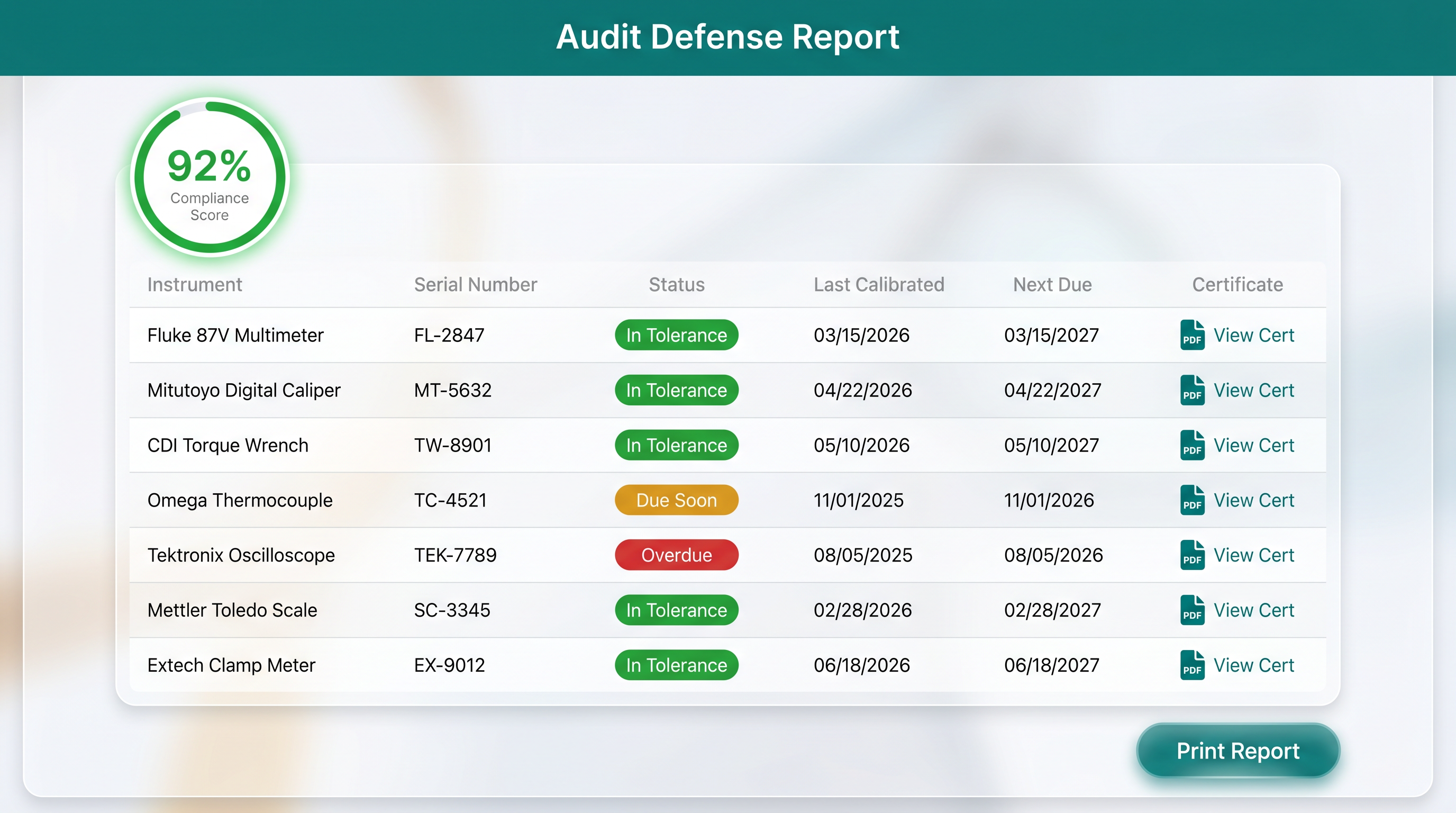
Color-coded status for every instrument in your system.
One-Click Reports
Generate audit-ready reports with all certificate data.
See It in Action
AuditCal's dashboard shows you exactly which certificates are expiring and generates compliance reports your auditor will accept. No more spreadsheet hunting.
The Real Cost of an Expired Calibration Finding
A minor nonconformance for an expired certificate might seem manageable. But the hidden costs add up quickly:
Compare those costs to a calibration management system that costs a fraction of a single follow-up audit visit — and the decision becomes obvious.
Related Resources
Never Let an Expired Certificate Surprise You Again
Start with the free 47-point checklist, or jump in and generate your first audit report.
14-day free trial — no credit card required