ISO 9001 Section 7.1.5 (Monitoring and Measuring Resources)
ISO 9001:2015 Clause 7.1.5.2 — Measurement Traceability requires:
- Equipment calibrated at defined intervals
- Calibration traceable to national or international standards (e.g., NIST)
- Identification of calibration status
- Protection from adjustment or damage
- Retention of documented information (calibration records)
In audit language, this becomes: “Show me that this instrument is calibrated, traceable, and valid right now.”
No delay. No searching.
What an ISO 9001 Auditor Actually Does
They won't start with your procedure. They will:
Walk to the floor
Pick a random instrument
Ask for proof
Typical questions:
- "What is the calibration status of this device?"
- "Show me the last calibration certificate."
- "Is this traceable to NIST?"
- "How do you control out-of-tolerance equipment?"
If your answer involves hesitation, they notice. If it involves delay, they escalate.
Real Audit Scenario (What Actually Happens)
A digital caliper is selected. You say it's in calibration. The auditor asks for proof.
You:
- Open a spreadsheet
- Scroll
- Check a date
- Search for a certificate
3 minutes later… you still don't have it.
That's when the auditor writes notes. “Evidence not readily available” = system weakness.
Common ISO 9001 Calibration Failures
1Expired Calibration (Most Common Finding)
- Instrument used past due date
- No system alert
- No quarantine process
2Missing or Incomplete Certificates
- Missing uncertainty values
- No traceability statement
- No standard reference
3No Measurement Traceability (7.1.5.2 Failure)
- Cannot link to NIST or equivalent
- External lab not verified
4Uncontrolled Equipment
- No calibration status label
- No unique ID
5Delayed Evidence Retrieval
- Records exist, but not accessible quickly
This last one — delayed evidence — is where most audits are lost.
Why Spreadsheets Break Under Audit Pressure
Spreadsheets create hidden risk:
- No real-time calibration status
- No automatic due-date alerts
- Certificates stored separately
- Version conflicts
So when the auditor asks for proof… you switch from control → reaction. That's when findings happen.
What a Passing Audit Looks Like
This is the difference. Auditor selects an instrument. You:
Time elapsed: 5–10 seconds. No explanation needed. No scrambling.
That's what control looks like. That's what auditors expect.
Most AuditCal users report pulling full records in under 10 seconds.
How AuditCal Solves This
AuditCal is built around one action: generate audit-ready reports instantly.
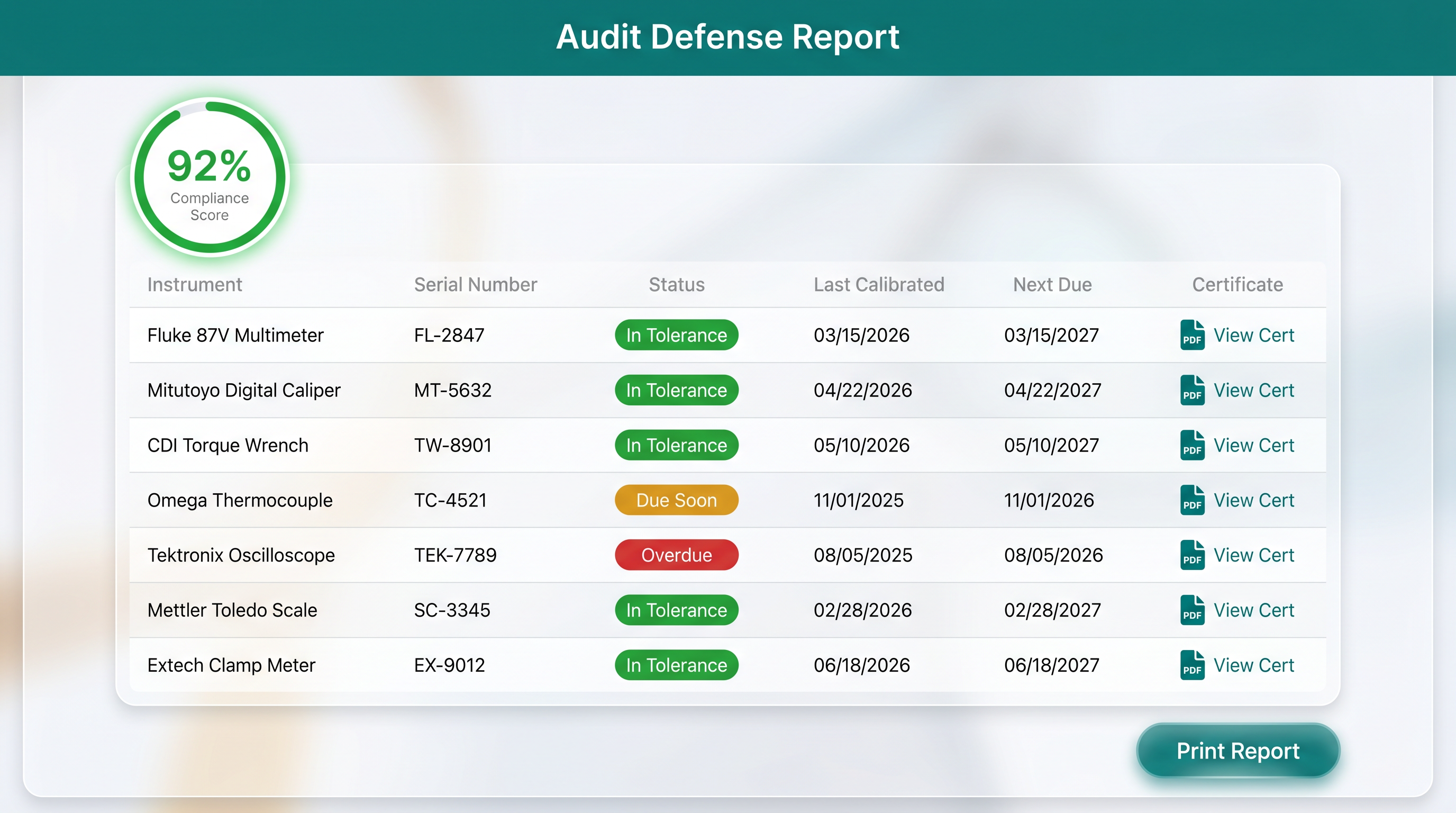
- Select instrument or group
- Click "Generate Report"
- Show auditor immediately
No spreadsheets. No searching. Most teams go from minutes → seconds retrieving records.
What to Do Before Your Next Audit
Don't wait for the auditor to find the gap.
No credit card required · 47-point checklist mapped to Section 7.1.5